
UX/UI | Product UX Design | Interaction Design | Information Architecture | Web Experience Design | Prototyping | User Research | Usability Testing | Design Systems | Cross-Functional Collaboration
My role was not simply visual execution - it was about defining how people think, move, and interact in an environment with fundamentally different input and perceptual requirements than mobile or desktop.
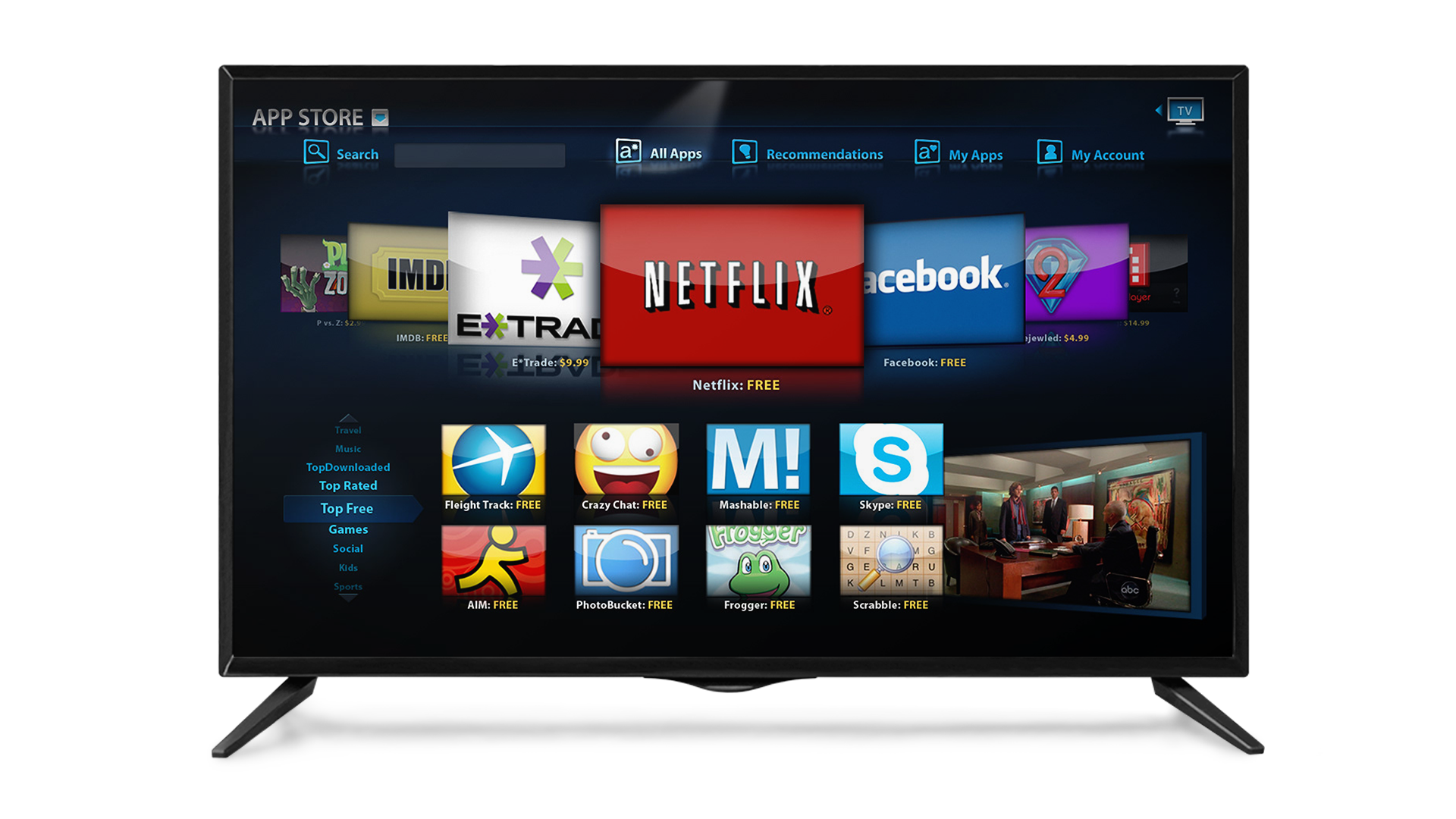
Project Overview
At Thug, I led the UX and interaction design for the first and second iteration of the App Up Smart TV platform, focusing on end-to-end experience from early concept through go-to-market delivery. The project involved translating complex platform capabilities into a simple, intuitive interface that worked across multiple TV manufacturers and remote interactions - where users often have limited input control and high expectations for clarity and responsiveness.
The Challenge
Designing for a Smart TV platform presents unique constraints: limited remote control input, long viewing distances, diverse content ecosystems, and the need to balance discoverability with simplicity. Unlike web or mobile, there’s no touch; interaction must be predictable and efficient despite minimal hardware controls. The challenge was to create navigation structures and visual hierarchies that felt natural, reduced cognitive load, and worked within the limitations of remote interactions while maintaining brand and product flexibility.
Approach
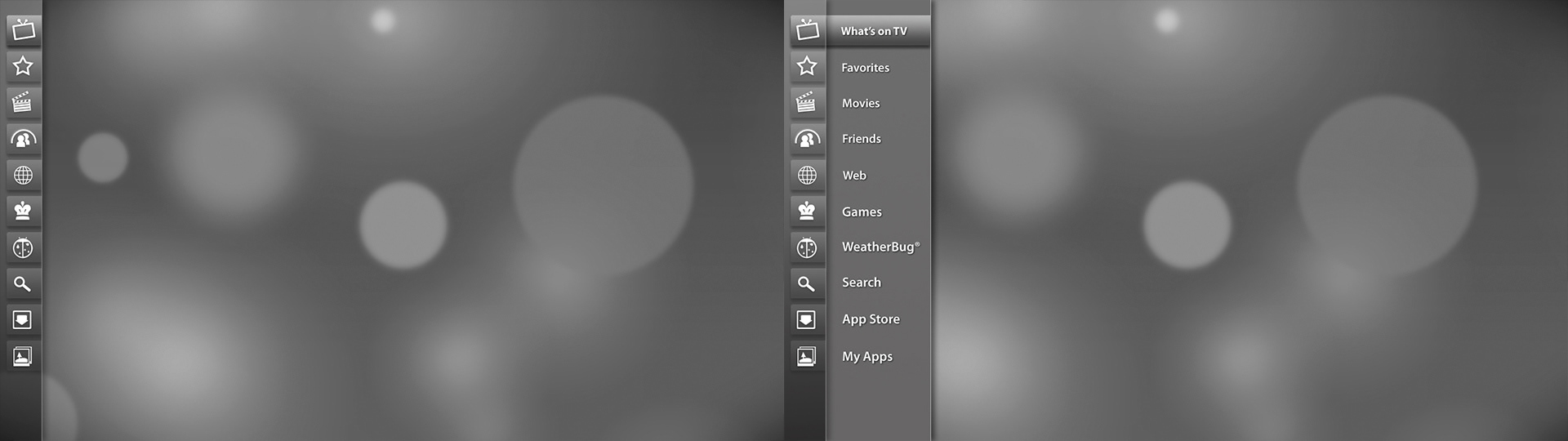
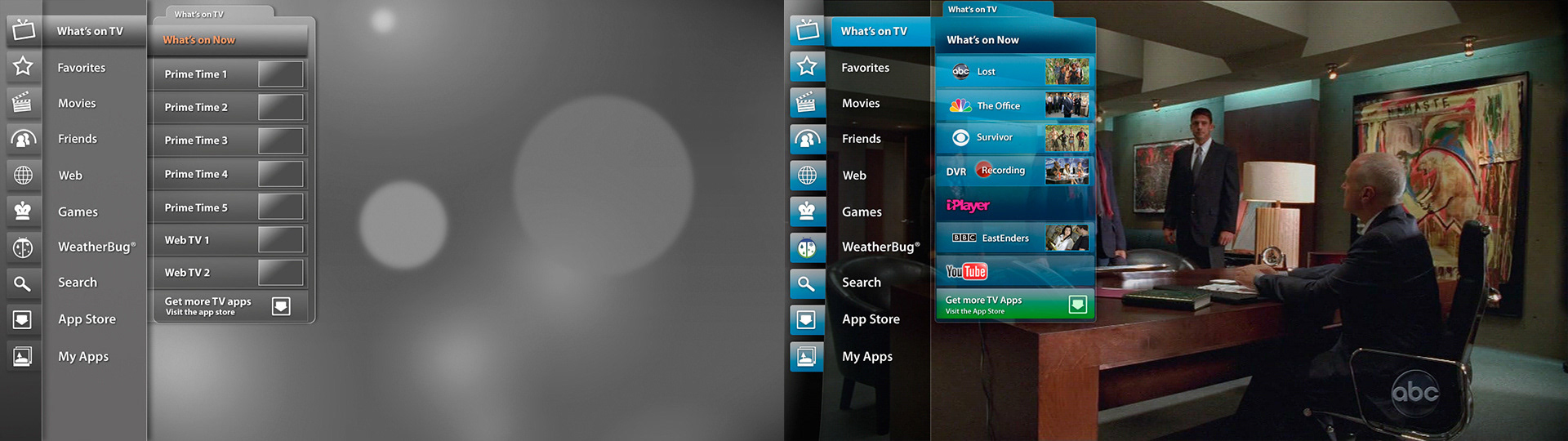
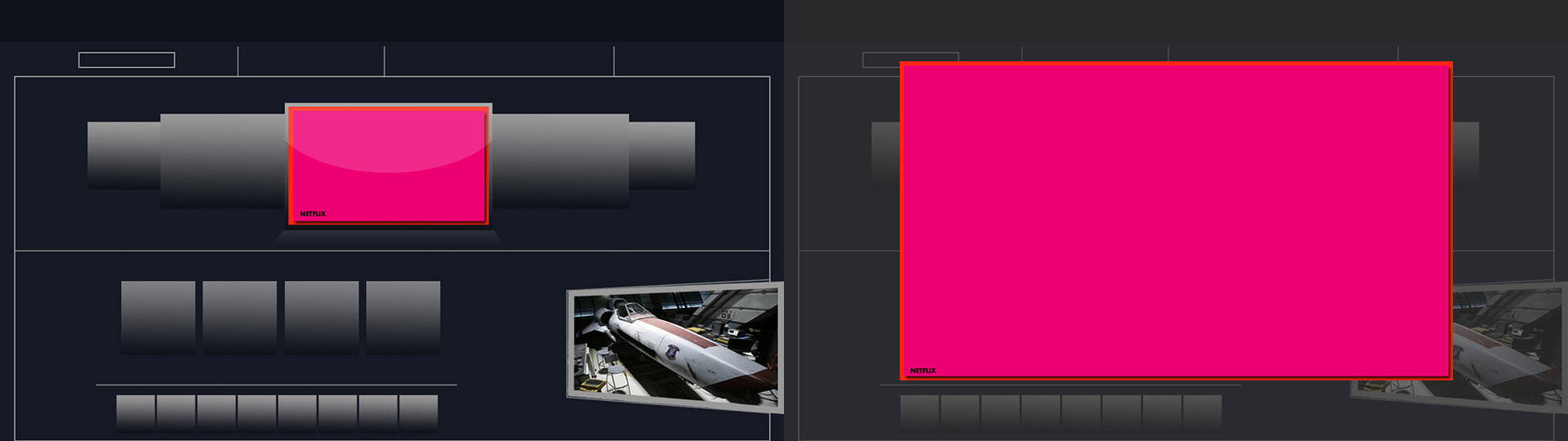
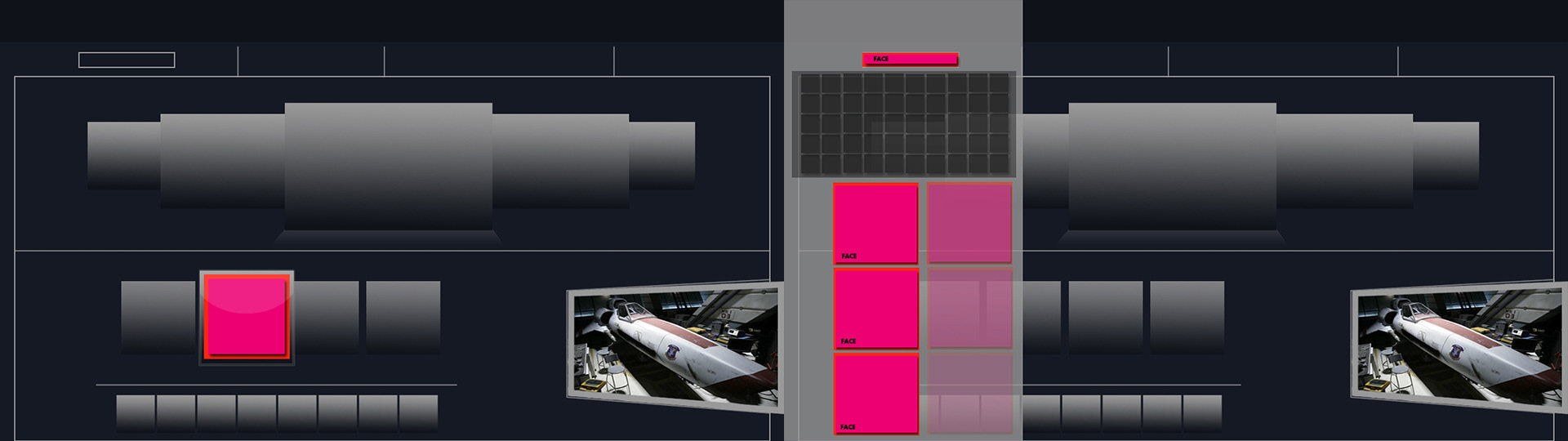
I began by mapping key user journeys (home navigation, content discovery, search, settings) against device constraints. Remote control navigation patterns were documented, tested, and refined to minimize depth and confusion. I established consistent focus indicators, predictable movement patterns (grid vs linear), and visual rhythms that helped orient users within the UI. Usability sessions - even simple session recordings - informed how quickly users could navigate to content with a remote, and where adjustments were necessary.
Design Solution
The outcome was a cohesive UI system and interaction model tailored for Smart TV:
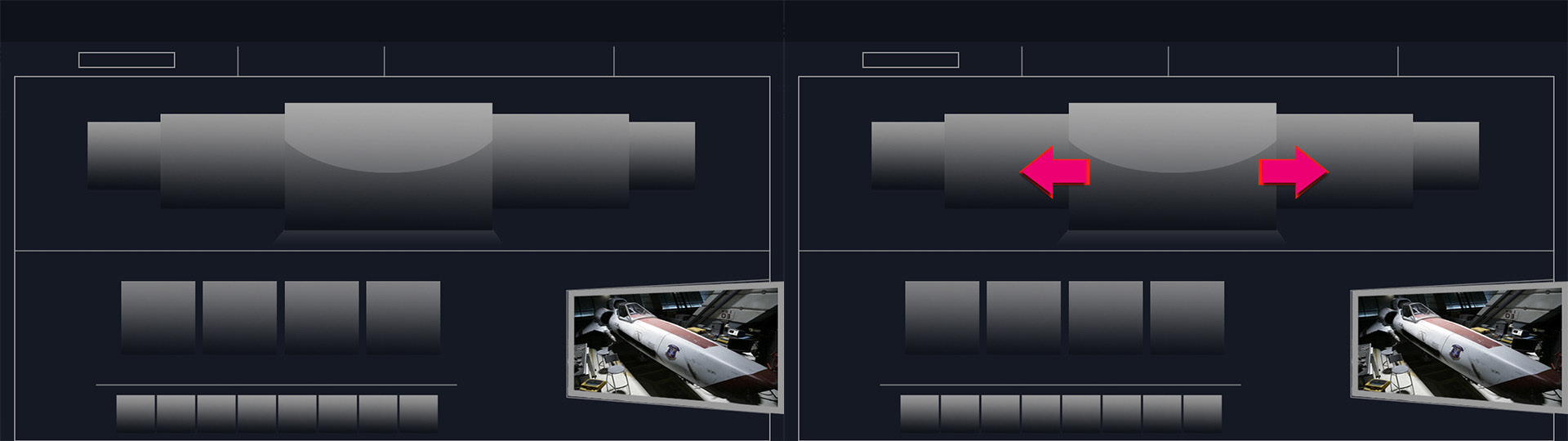
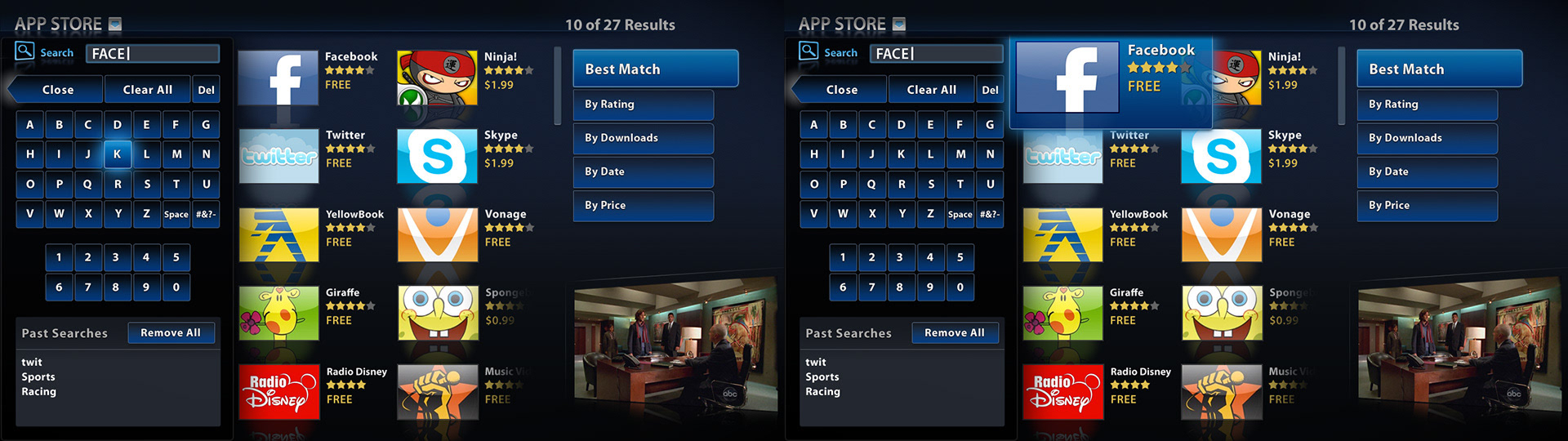
- Focus & Navigation Framework: Clear focus states and directional movement that worked predictably with remotes.
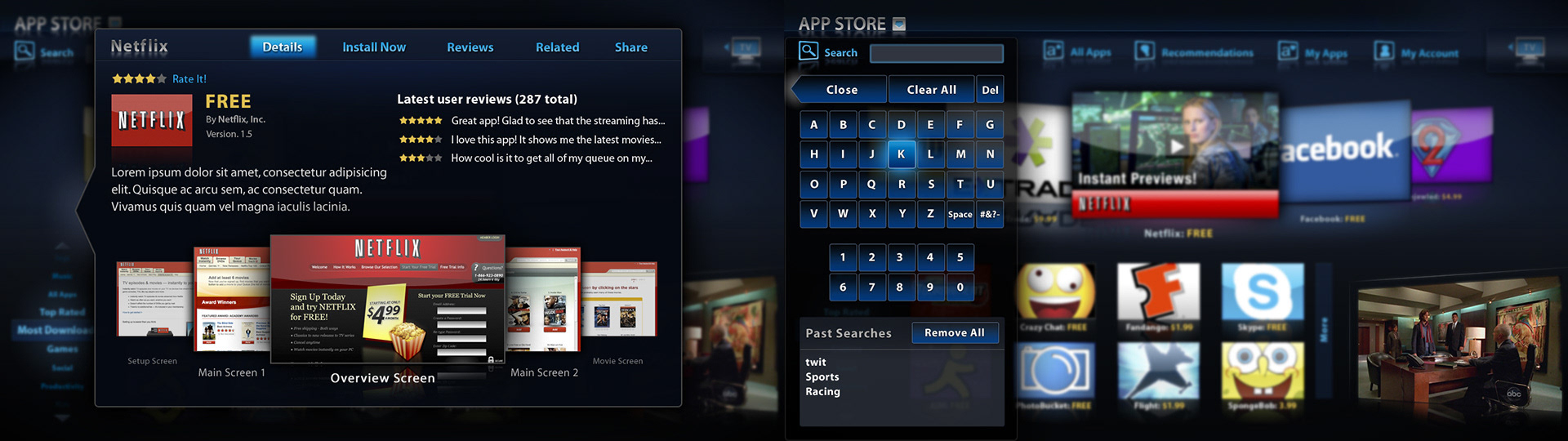
- Information Hierarchy: Visual grouping and spacing that reduced noise and made scanning effortless at a distance.
- Modular Layouts: Reusable layout patterns that accommodated different content types and partner requirements.
- Prototyped Interactivity: Click-through prototypes that demonstrated real directional navigation and state change, helping engineering understand motion and timing expectations.
- Developer-Ready Specs: Detailed documentation and interaction maps to ensure fidelity from design to build.
Collaboration & Delivery
Working with product and engineering, I ensured design decisions were technically feasible while still meeting usability goals. Regular design reviews, shared prototypes, and annotated specs helped align cross-functional teams around a shared understanding of user intent. Because Smart TV experiences are sensitive to performance and latency, interaction decisions were vetted against real hardware constraints as early and often as possible.
Impact
The redesigned Smart TV platform delivered:
- A navigation system that felt natural and reliable across remote controls
- Reduced cognitive load for users interacting with content libraries
- A modular design system that could be extended to new partners and hardware
- Prototypes and documentation that reduced ambiguity in development and QA
This work laid a foundation for scalable UX patterns on large screen interfaces - an environment where traditional mobile/desktop paradigms don’t apply, yet user expectations for ease and performance remain high.